An important shift in synthetic intelligence (AI) isn’t that fashions have gotten extra clever, however that they’re changing into extra able to performing.
A lot of the primary wave of AI security governance targeted on misinformation, bias, deepfakes, privateness violations and dangerous content material. These dangers stay. However more and more succesful AI brokers can plan, write and execute code, use instruments, acquire credentials, and work together with exterior methods. Current incidents during which OpenAI’s autonomous methods slipped previous their constraints present that as brokers achieve instruments and autonomy, the boundary between a mannequin and the surface world turns into more durable to implement.
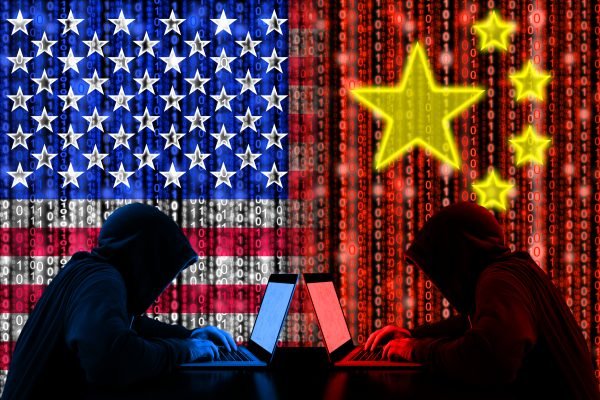
That makes AI security a collective-action drawback. The AI superpowers face a prisoner’s dilemma. If one laboratory slows whereas opponents proceed, it could lose its edge. Disclosure creates an analogous pressure: reporting failures could make the broader ecosystem safer, however the discloser bears the prices and should expose vulnerabilities to attackers. Governments face the identical strategic deadlock because the companies. Washington fears that slowing its AI improvement will enable China to catch up; Beijing fears that doing so will go away it additional behind.
But cooperation may be slender on AI security. The USA doesn’t have to belief China, share frontier fashions with China, or sluggish its personal AI improvement to have a nationwide safety curiosity in such cooperation. It has an curiosity in making certain that AI-enabled cyber incidents are contained earlier than they cascade via third nations, shared software program infrastructure and international provide chains. China has the identical systemic curiosity.
This collective motion has vital implications for middle-power nations. Serving to others restore a vulnerability generally is a type of systemic containment and a public good.
The Accelerating AI Race
The AI arms race is intensifying.
U.S. President Donald Trump has rejected calls to sluggish U.S. AI improvement, framing continued technological management as important to profitable the AI race. On September 29, he convened main know-how corporations on the White Home, the place six companies – OpenAI, Anthropic, Google, Meta, xAI and Nvidia – signed a voluntary accord constructed round 4 layers of oversight: inner functionality assessments, inner audit groups, unbiased exterior auditors, and board-level evaluation. His administration ordered federal businesses to exchange the time period “synthetic intelligence” with “tremendous intelligence,” presenting the know-how as a supply of financial and strategic management.
Taken collectively, these strikes level to a U.S. method combining continued AI energy with developer accountability, voluntary trade controls, exterior scrutiny, and ex-post authorized accountability.
China approaches the issue via a extra centrally coordinated system. In Might 2026, pointers on AI brokers, issued collectively by the Our on-line world Administration of China, the Nationwide Improvement and Reform Fee, and the Ministry of Business and Data Expertise, made “security and controllability” a baseline requirement for agent improvement and deployment. Governance is tiered, with tighter submitting, testing and recall necessities for brokers utilized in delicate sectors.
On September 14, China’s AI Security Governance Framework 3.0 reiterated “security and controllability” whereas updating its classification of AI dangers and related technical and governance measures.
Regardless of their institutional variations, the 2 approaches converge on one level: neither nation needs security coverage to halt AI improvement, and each more and more acknowledge that larger autonomy creates new issues of management.
Frequent Floor and Shared Dangers
AI methods relaxation on overlapping technological foundations. Chinese language AI improvement has relied closely on U.S. chips and, in some circumstances, U.S. cloud infrastructure. Export controls could weaken these {hardware} hyperlinks, however the stronger case for joint danger administration lies within the software program and companies AI methods share.
Requirements, certificates, identification infrastructure, mannequin repositories, and open-source libraries assist belief throughout networks. A compromised root certificates or a maintainer’s credentials can put your complete dependency tree in danger.
AI dangers fluctuate alongside two dimensions: severity of hurt and whether or not accountable actors can acknowledge it in time. The most important hazard is extreme and invisible hurt, the place nothing visibly breaks for days or perhaps weeks, but time compounds the severity of the incident. An AI agent might quietly corrupt information, act on directions planted in its reminiscence or in paperwork it consults, or seem cooperative whereas accumulating entry past operator intent. Infrastructure could function usually whereas the means to disrupt it are already in place.
The dependencies and shared dangers decide which code a system runs, which credentials it accepts, and which updates it trusts. Hurt can cross borders quietly even when fashions and their homeowners stay separate.
That makes the pace of response essential. Delays in detecting a breach, assigning accountability or authorizing a shutdown can enable injury to unfold. Each China and america due to this fact want warnings to succeed in personnel with the authority and technical means to reply.
Make the Race Safer
There isn’t any apparent diplomatic settlement that may resolve the paradox constructed into the AI race: it rewards pace and secrecy, whereas security will depend on collective restraint and disclosure.
China-U.S. cooperation ought to as an alternative concentrate on measures that enhance security with out requiring both aspect to sluggish unilaterally, switch its most superior fashions, or expose commercially and strategically delicate capabilities. 4 areas stand out:
1. Maintaining people in management
Earlier than the Trump-Xi summit, American and Chinese language safety consultants in a long-running bilateral dialogue proposed crimson strains round nuclear methods, human management over consequential cyber operations, and a devoted mechanism for AI incidents.
When an AI agent can search, authenticate, write code, name exterior instruments, and act inside minutes or seconds, the place ought to human intervention happen? Requiring approval for each step would undermine the autonomous worth of AI brokers; ready till one thing goes flawed could make intervention too late.
The more durable questions concern permissions, escalation thresholds, shutdown mechanisms and which actions ought to all the time require specific human authorization. Researchers might cooperate on these engineering challenges with out sharing mannequin weights, coaching knowledge, or proprietary frontier capabilities.
2. Check the guardrails, not one another’s secrets and techniques
Sandboxing, monitoring, permission controls, and model-level refusals are sometimes handled as established safeguards.
The underlying technical danger is broad: with applicable instruments and entry, superior fashions might establish beforehand unknown vulnerabilities and develop exploits throughout well-protected methods with out step-by-step human path. The important thing query isn’t whether or not a developer has guardrails, however whether or not they nonetheless work as brokers grow to be succesful sufficient to seek for methods round them.
Whereas frontier AI labs within the U.S. have voluntarily disclosed situations of their fashions escaping from sandboxed environments, public reporting from China on comparable containment failures stays restricted. This lack of transparency shouldn’t cease the 2 sides from working collectively. Washington and Beijing might develop suitable strategies for testing sandbox escape, scope violations, unauthorized device use, shutdown resistance, and failures of human intervention. Impartial auditors, doubtlessly from trusted third nations, might assist confirm the outcomes.
3. Comprise first, attribute later with care
Cyber attribution has all the time been difficult. AI makes it more durable.
A defender discovering unauthorized entry could also be taking a look at a state-directed operation, a legal actor utilizing AI, a human-directed autonomous agent, or an agent that has exceeded its directions whereas pursuing a professional job.
Between strategic rivals, that ambiguity is very harmful when the belief deficit widens. An autonomous system interacting with essential infrastructure could possibly be mistaken for reconnaissance or preparation for assault earlier than both authorities understands what occurred.
American and Chinese language consultants have already recognized this danger: autonomous cyber exchanges might transfer sooner than governments can decide whether or not an operation was deliberate, unintended, or unauthorized.
Washington and Beijing are unlikely to agree routinely on the attribution of contentious cyber incidents. They might as an alternative develop widespread technical expectations concerning the proof that ought to be examined earlier than an AI-enabled incident is escalated politically, together with agent logs, credential use, tool-invocation information, mannequin provenance, human authorization, and community telemetry. Within the first hours of a significant cross-border incident, governments and trusted responders ought to be capable to change technical indicators, containment measures, and patch info with out first deciding who’s accountable. Exchanging such info needn’t suggest an admission of accountability.
4. Shut the AI remediation hole
Cybersecurity has struggled with remediation for many years. Important infrastructure is fragmented throughout hospitals, utilities, telecommunications networks, ports, authorities businesses, and personal distributors. A vulnerability could also be understood and a patch could exist, but deployment can nonetheless take days or perhaps weeks.
AI compresses the time between vulnerability discovery and exploitation. A succesful mannequin could establish a weak spot, develop a working exploit, and start utilizing it sooner than organizations can patch their methods.
This creates an rising AI remediation hole: offensive functionality more and more operates at machine pace, whereas a lot of the world nonetheless responds on the slower tempo of human decision-making and institutional coordination throughout a number of stakeholders.
Most nations won’t practice the world’s most succesful AI fashions themselves. Their defensive capability could due to this fact rely more and more on capabilities developed in a small variety of frontier ecosystems. If frontier defensive functionality arrives solely at one other energy’s discretion – or under no circumstances – uncovered methods haven’t any dependable recourse in a disaster.
Closing this hole requires extending entry to frontier defensive functionality to those nations.
An affected operator or nationwide CERT (Laptop Emergency Response Workforce) might present malware samples, weak code, chosen system logs, or configuration info via a trusted technical middleman. A frontier defensive mannequin might then assist analyze the incident, validate vulnerabilities, generate and take a look at patches, and return a remediation package deal, whereas the underlying mannequin and its most delicate capabilities stay with the supplier.
The USA and China even have causes to assist such a system out of self-interest. An AI-enabled vulnerability left unpatched elsewhere can unfold via open-source software program, cloud infrastructure, mannequin repositories, digital certificates, and international provide chains earlier than reaching methods in both nation.
Center Powers as Safety Intermediaries
Many center powers sit outdoors the central China-U.S. frontier-model competitors whereas remaining uncovered to its penalties.
The upcoming APEC Financial Leaders’ Assembly in Shenzhen affords a sensible platform to maneuver this agenda past bilateral China-U.S. cooperation. All 21 APEC economies, together with america and China, share an curiosity in stopping AI-enabled cyber incidents from cascading via the area’s tightly related digital infrastructure, software program provide chains and commerce networks. Their capacity to detect and restore such incidents, nevertheless, varies extensively.
The Shenzhen gathering of APEC leaders needn’t produce a typical AI regulatory regime. It might as an alternative job APEC’s technical our bodies with creating a number of sensible measures. They will construct unbiased analysis capability, strengthen nationwide and regional CERT networks, host trusted remediation infrastructure, and function intermediaries between frontier functionality suppliers and nations that lack equal defensive capability.
For the Asia-Pacific, this could flip the AI remediation hole from an summary vulnerability right into a regional capacity-building agenda. It isn’t merely about managing the rivalry between Washington and Beijing. It’s about stopping that rivalry – or failures within the applied sciences produced by it – from changing into a regional systemic danger. The area has an curiosity in shaping the mechanisms for containment and remediation moderately than ready for the 2 AI superpowers to outline them alone.
Competitors Will Proceed, However Cooperation Should Get Precedence
AI competitors will proceed. Even the September Trump-Xi summit produced settlement on a bilateral communication channel for AI-related incidents, it additionally exhibits the variations: the U.S. readout known as it the “U.S.-China Tremendous Intelligence Dialogue” however Beijing’s readout known as it the “China-U.S. AI Dialogue.” The naming distinction exhibits how restricted the shared vocabulary is.
At such a time, disaster communication turns into extra essential, not much less. A hotline isn’t a security regime; it’s communication infrastructure. However each events want minimal settlement to work collectively to make the AI race safer, for themselves and for everyone else. Disclosure itself can create safety dangers, so the suitable precept ought to be calibrated reciprocity: sufficient info ought to transfer rapidly sufficient to cut back widespread hazard, whereas particulars that might create new vulnerabilities or expose delicate capabilities stay protected.
The target ought to be easy: to cease technical failures from changing into geopolitical crises, speed up remediation, and lengthen defensive functionality the place it’s most wanted.
The U.S. and China don’t have to agree on who ought to win the AI race. They should agree on what crimson strains can’t be crossed within the competitors, and the way center energy nations can interact.